Japan and Korea represent two of the world’s most sophisticated warm patch (カイロ/온팩) markets. Both countries have deeply embedded warm patch usage in daily life — from winter commuting to outdoor sports to elderly care. For manufacturers and distributors, these markets offer high volume, premium pricing, and demanding quality expectations. This guide covers the compliance landscape, consumer trends, and sourcing strategy for entering Japan and Korea.
Market Overview
Japan: The Mature Warm Patch Market
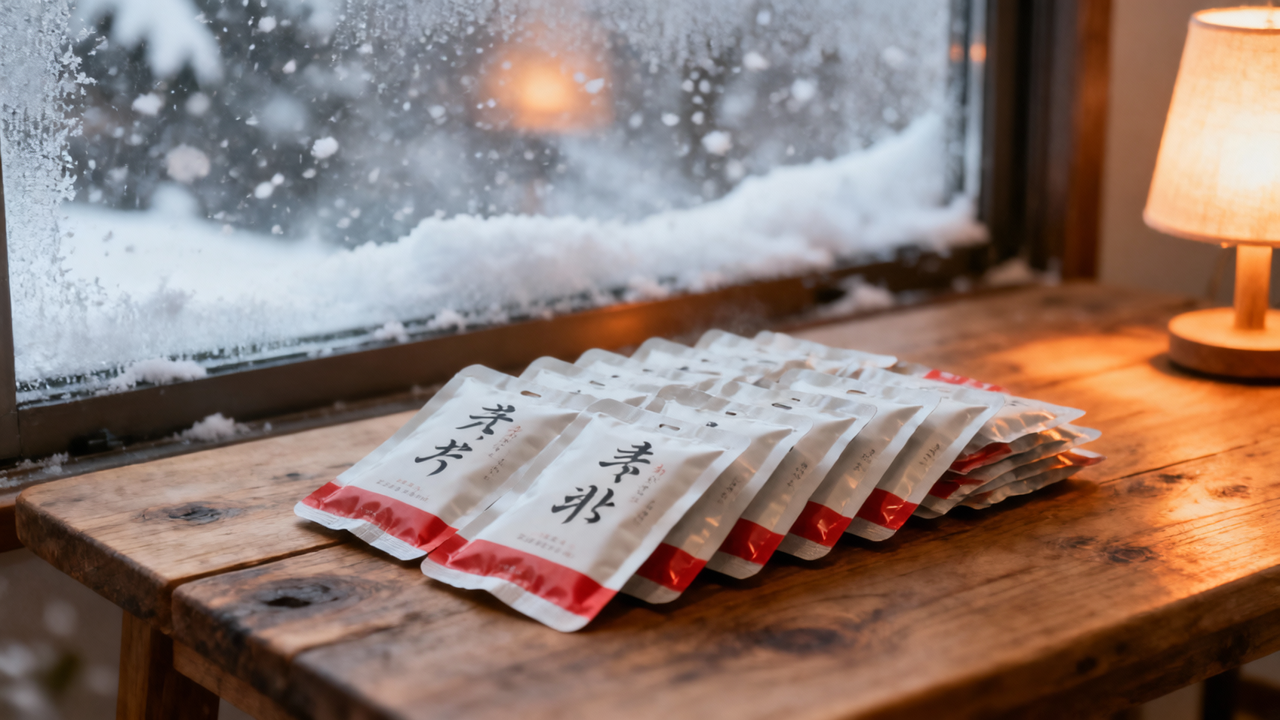
Japan is the world’s most developed warm patch market, with usage dating back decades:
- Market size — Estimated 2+ billion units annually (all formats combined)
- Per capita consumption — Highest in the world
- Seasonality — October to March peak; year-round demand for therapeutic patches
- Average price point — Premium compared to other markets
- Brand consciousness — Strong brand loyalty; quality reputation matters
Dominant use cases:
- Daily winter commuting (disposable body warmers)
- Outdoor sports and recreation
- Office worker desk use
- Elderly care and pain management
- Menstrual pain relief
Korea: The Fast-Growing Market
Korea combines strong traditional medicine heritage with modern wellness trends:
- Market characteristics — Growing faster than Japan; high online penetration
- Seasonality — November to February peak; year-round therapeutic use
- Consumer behavior — Strong preference for premium, design-forward products
- E-commerce dominance — High online purchase rate (Coupang, Naver Shopping)
Dominant use cases:
- Winter outdoor activities (skiing, hiking)
- Office and study use
- Post-exercise recovery
- Menstrual pain relief
- Gift and premium corporate markets
Regulatory Requirements
Japan: Ministry of Health, Labour and Welfare (MHLW)
Product Classification
Warm patches in Japan fall into several regulatory categories:
Category A: General Warm Patch (一般カイロ)
- No medical claims; marketed as warming product
- No MHLW registration required for the product itself
- Must comply with Electrical Appliances and Material Safety Law if using electrical heating
- Chemical warm patches (iron oxidation) require proper ingredient labeling
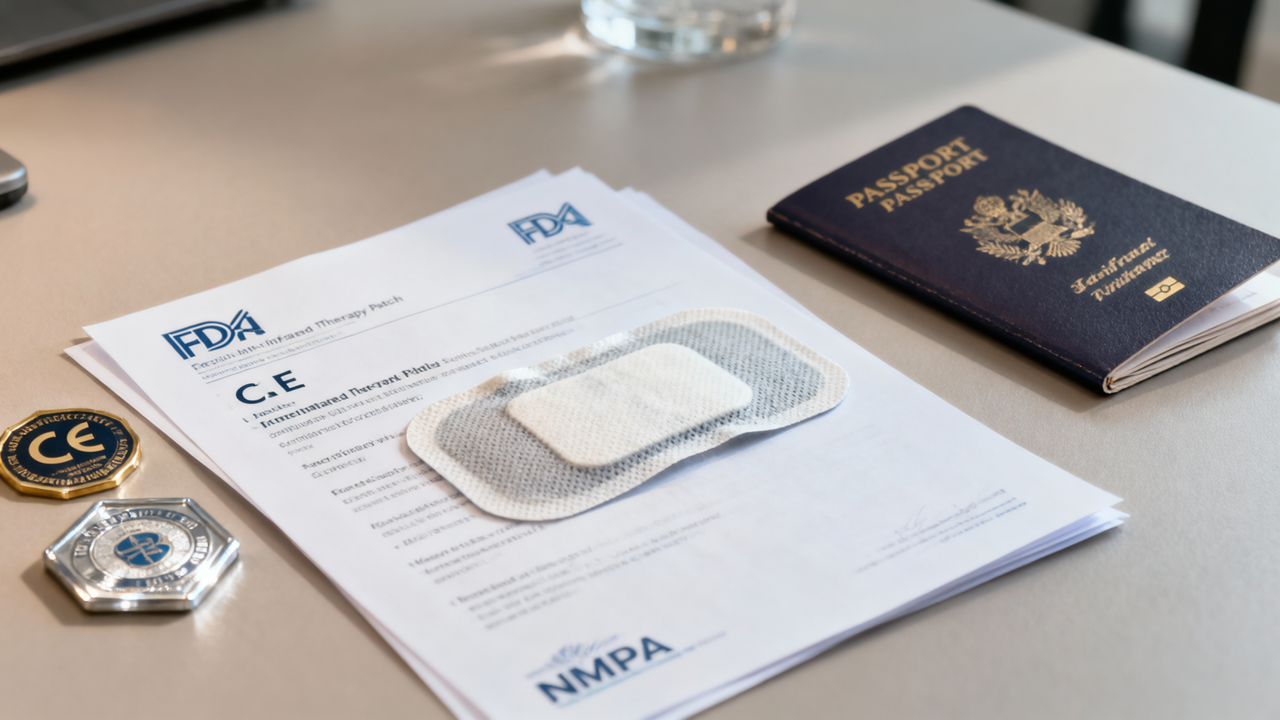
Category B: Medical Device (医療機器)
- If making medical claims (pain relief, circulation improvement)
- Requires MHLW medical device registration
- Class I (todayki) or Class II (seigetsu) depending on claims
- Manufacturing site must meet QMS requirements (ISO 13485 or equivalent)
Category C: Quasi-Drug (医薬部外品)
- If claiming mild therapeutic effects
- Requires MHLW quasi-drug registration
- More rigorous than general product, less than medical device
Key Requirements
- Japanese language labeling — Mandatory
- Ingredient disclosure — All active ingredients listed
- Temperature and duration specifications — Accurate claims required
- Safety warnings — Burn risk, age restrictions, usage duration
- Importer of record — Must have Japanese entity for product registration
- Product Liability (PL) insurance — Expected by Japanese retailers
Korea: Ministry of Food and Drug Safety (MFDS)
Product Classification
Category A: General Product (일반물품)
- No medical claims; warming function only
- No MFDS registration required
- Must comply with Korea Consumer Agency labeling standards
- Safety testing per Korean Industrial Standards (KS)
Category B: Medical Device (의료기기)
- Medical claims require MFDS medical device registration
- Class I or Class II depending on risk level
- Manufacturing site GMP certification required
- Korean importer holds the registration
Category C: Quasi-Drug (의약외품)
- Mild therapeutic claims (pain relief, etc.)
- MFDS quasi-drug registration required
- Specific ingredient restrictions apply
- Manufacturing site GMP certification required
Key Requirements
- Korean language labeling — Mandatory
- KC certification mark — Required for electrical products
- Ingredient disclosure — Korean ingredient names
- Safety standards — Temperature limits, burn risk prevention
- Importer of record — Korean entity required
- Post-market surveillance — Adverse event reporting
Consumer Trends
Japan: Quality and Refinement
Japanese consumers demand the highest quality and pay premiums for:
- Consistent heat output — Stable temperature throughout claimed duration
- Comfortable adhesion — Gentle on skin, no residue, easy removal
- Odorless operation — No chemical smell during heating
- Elegant packaging — Minimalist, refined design aesthetic
- Brand trust — Established brands command loyalty
- Eco-conscious options — Growing demand for biodegradable materials
Korea: Design and Differentiation
Korean consumers prioritize:
- Aesthetic design — Visually appealing products for social media sharing
- Innovation — New formats, scents, and features
- K-beauty crossover — Warm patches marketed alongside skincare
- Functional scents — Lavender, citrus, and aromatherapy integration
- Convenience — Slim profile, easy to carry, fashionable packaging
- Online reviews — Strong influence of social commerce and reviews
Product Specifications for Japan and Korea
Temperature Profiles
Both markets have specific temperature expectations:
| Type | Temperature Range | Duration | Use Case |
|---|---|---|---|
| Body warmer | 50-63°C | 10-14 hours | General warming |
| Foot warmer | 40-50°C | 5-8 hours | Shoes/boots |
| Hand warmer | 50-60°C | 8-12 hours | Pockets/gloves |
| Therapeutic patch | 40-45°C | 5-8 hours | Pain relief (lower temp for safety) |
| Menstrual patch | 40-50°C | 6-8 hours | Abdominal warming |
Critical: Temperature consistency is non-negotiable. Fluctuations or hot spots cause burns and product returns.
Adhesion Quality
Japanese and Korean consumers are particularly sensitive to:
- Skin irritation — Medical-grade hypoallergenic adhesive required
- Residue — No adhesive residue on skin or clothing
- Clothing damage — Adhesive must not damage fabrics
- Easy removal — Painless removal even after extended use
- Sweat resistance — Maintains adhesion during physical activity
Material Quality
- Outer fabric — Soft, breathable, non-woven (preferably cotton-blend)
- Inner contents — High-purity iron powder, activated carbon, vermiculite, salt
- Adhesive — Medical-grade acrylic adhesive
- Release liner — Silicone-coated, easy peel
- Packaging — Individual sealed sachets with oxygen barrier
OEM Sourcing Strategy
Why Source from China
Chinese manufacturers offer compelling advantages for Japan and Korea markets:
- Cost efficiency — 30-50% lower production cost than domestic Japanese/Korean manufacturing
- Scale capability — High-volume production capacity
- Quality capability — Many factories meet Japan/Korea quality standards
- Customization — Full OEM/ODM capabilities including formulation, packaging, branding
- Proximity — Shorter shipping times than Western suppliers
Quality Expectations
Japanese and Korean markets have the highest quality expectations globally. Your OEM partner must demonstrate:
- Temperature consistency testing — Lot-to-lot consistency data
- Duration testing — Verified heating duration claims
- Adhesion testing — Skin friendliness and residue testing
- Material safety testing — Heavy metals, microbial, chemical safety
- Stability testing — Shelf-life validation under various conditions
- Batch traceability — Full lot tracking for recall readiness
OEM Customization for Japan and Korea
- Temperature profiles — Custom formulations for specific temperature curves
- Durations — 8, 10, 12, 14-hour options
- Sizes and shapes — Body, foot, hand, neck, shoulder, abdomen
- Scented options — Lavender, yuzu, hinoki, citrus (for Japan); citrus, floral (for Korea)
- Packaging design — Japanese minimalist or Korean trendy aesthetics
- Language labeling — Native Japanese or Korean, fully compliant
- Private label branding — Your brand on premium packaging
Market Entry Strategy
Phase 1: Regulatory and Market Research
- Identify product classification (general product vs medical device vs quasi-drug)
- Research competitor pricing and positioning
- Identify target distribution channels
- Engage regulatory consultant in target market
Phase 2: Partner Identification
- Find local distributor or establish local entity
- Japanese distributors expect exclusive territory rights and long-term commitment
- Korean market favors direct e-commerce entry for new brands
Phase 3: Product Development and Certification
- Develop product specifications for target market
- Complete required certifications and registrations
- Conduct consumer testing with target market consumers
- Finalize packaging and labeling compliance
Phase 4: Channel Entry
Japan entry paths:
- Drug store chains (Matsumoto Kiyoshi, Welcia, Tsuruha)
- Home centers (Tokyu Hands, Cainz)
- Convenience stores (7-Eleven, Lawson, FamilyMart)
- E-commerce (Amazon Japan, Rakuten, Yahoo Shopping)
Korea entry paths:
- Online marketplaces (Coupang, Naver Shopping, 11st)
- Drug stores (Olive Young, Bohun)
- Home shopping (CJ OShopping, GS Shop)
- Convenience stores (CU, GS25, 7-Eleven)
Our OEM Capabilities for Japan and Korea
Manufacturing Standards
- GMP-compliant facility — Class 100K cleanroom for patch production
- Quality system — Full QMS with documented procedures
- Testing capability — In-house temperature, adhesion, and safety testing
- Documentation — Complete technical files for regulatory submission
Custom Formulation
- Temperature curves — Customized for Japanese/Korean consumer preferences
- Duration options — 8-14 hour heating profiles
- Scented variants — Essential oil infusion (lavender, citrus, herbal)
- Sensitive skin formulations — Hypoallergenic adhesive options
Packaging Capabilities
- Japanese-style minimalist design — Clean, refined packaging
- Korean-style trendy design — Vibrant, social-media-ready packaging
- Multi-language labeling — Japanese, Korean, English
- Premium materials — High-quality box and sachet printing
- Compliant labeling — All required warnings and ingredient lists
Logistics Support
- FOB Shanghai/Ningbo — Standard export
- CIF Yokohama/Busan — Port-to-port delivery
- Air freight option — For time-sensitive launches
- Consolidated shipping — Combine with other product lines
MOQ and Pricing
Minimum Order Quantities
- Standard warm patches — 50,000 units per SKU
- Custom formulations — 100,000 units per SKU
- Scented variants — 50,000 units per scent
- Premium packaging — 30,000 units per design
Pricing Structure
Pricing depends on:
- Temperature duration — Longer duration = higher cost
- Scented vs unscented — Scented adds 10-15% premium
- Packaging complexity — Custom premium packaging adds cost
- Order volume — Significant volume discounts
- Quality tier — Medical-grade materials cost more
Contact us for detailed quotations based on your specific requirements for the Japanese or Korean market.
Why Choose Us for Japan and Korea OEM
- Quality track record — Manufacturing standards meeting Japan/Korea expectations
- Regulatory documentation — Full technical files for MHLW/MFDS submissions
- Cultural understanding — Experience with Japanese and Korean market requirements
- Customization depth — Formulation, packaging, and branding all customizable
- Scale capability — From 30,000 unit pilots to 1M+ unit annual programs
- Bilingual support — English and Chinese communication; Japanese/Korean labeling capability
- Long-term partnership — Committed to supporting your market growth over time
Conclusion
Japan and Korea are premium warm patch markets that reward quality, consistency, and cultural understanding. Success requires understanding regulatory requirements, consumer preferences, and sourcing from a manufacturer who can meet the demanding standards of these markets. With the right OEM partner, these markets offer sustainable, high-margin opportunities for distributors and brands.