Not all mugwort is equal. For TCM practitioners, wellness brands, and discerning wholesale buyers, the geographic origin of mugwort (Artemisia argyi) determines its quality, efficacy, and market value. Qichun County in Hubei Province — known as the “Home of Mugwort” — produces what TCM regards as the premium grade: 蕲艾 (Qichun mugwort). Understanding why geography matters helps buyers make informed sourcing decisions.
The Qichun Terroir
Geographic Specifics
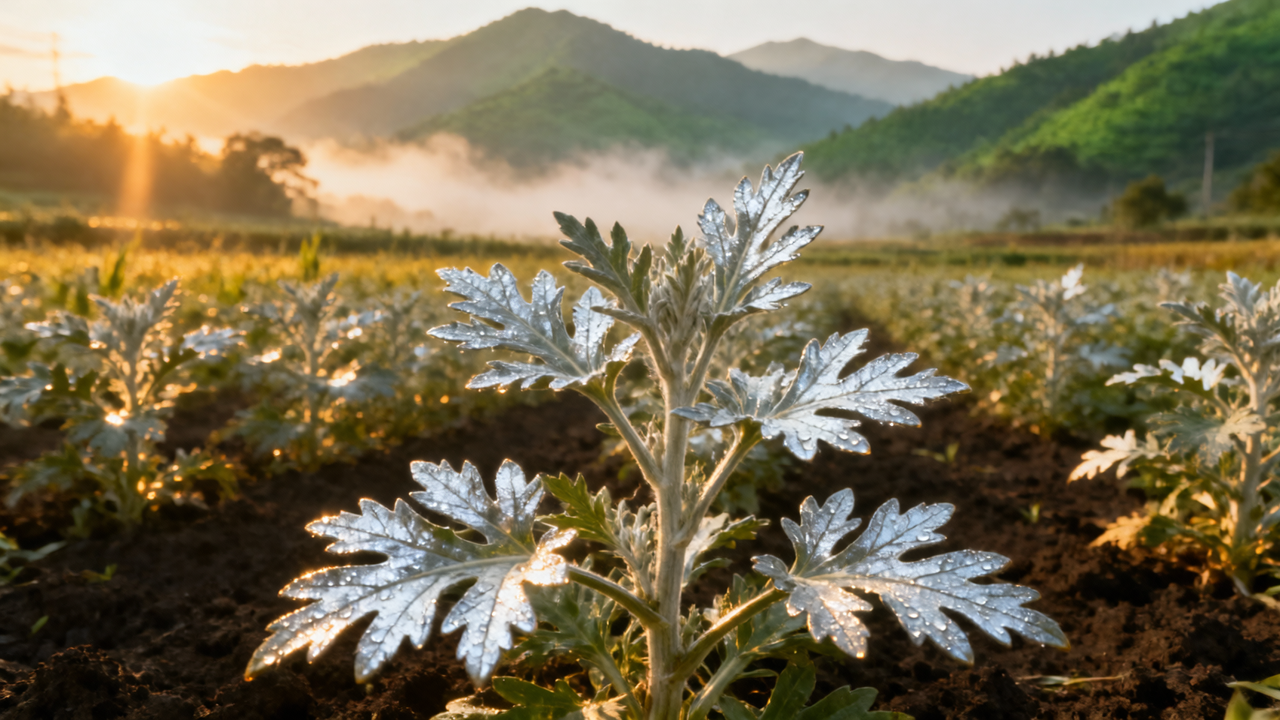
Qichun County is located in Hubei Province, central China, along the Yangtze River basin. The specific geographic conditions that create premium mugwort:
- Latitude: 29°50’-30°15’N — Optimal for Artemisia argyi growth cycle
- Elevation: 100-500m above sea level — Moderate altitude stress concentrates active compounds
- Climate: Subtropical monsoon — Hot humid summers, mild winters
- Rainfall: 1,300-1,600mm annually — Abundant moisture during growing season
- Soil: Yellow-brown earth, slightly acidic (pH 5.5-6.5) — Rich in minerals
- Sunlight: 1,900-2,100 hours annually — Sufficient for photosynthesis and oil production
Why This Matters
These conditions create a unique microenvironment that stresses the mugwort plant just enough to concentrate essential oils and active compounds — similar to how terroir affects wine grapes.
Chemical Profile Comparison
Key Active Compounds
Mugwort’s therapeutic properties come from its essential oil and secondary metabolites:
- Volatile oils — Primary therapeutic agents (1.8-cineole, camphor, borneol)
- Flavonoids — Anti-inflammatory and antioxidant compounds
- Tannins — Astringent properties
- Sesquiterpene lactones — Bitter compounds with medicinal activity
Qichun vs Other Origins
Comparative studies show Qichun mugwort’s advantages:
| Compound | Qichun Mugwort | Other Origin Mugwort |
|---|---|---|
| Total volatile oil | 0.83-1.20% | 0.45-0.75% |
| 1,8-Cineole | Higher | Lower |
| Camphor | Higher | Lower |
| Borneol | Significantly higher | Lower |
| Flavonoid content | Higher | Moderate |
| Total ash content | Lower (cleaner) | Higher |
Key takeaway: Qichun mugwort contains roughly 30-60% more volatile oil than mugwort from other regions — the difference is measurable and significant.
Historical TCM Recognition
Li Shizhen and the Bencao Gangmu
Qichun mugwort’s reputation is not modern marketing — it spans 500+ years. Li Shizhen (1518-1593), the great TCM pharmacologist, was born in Qichun. In his monumental work Bencao Gangmu (Compendium of Materia Medica, 1578), he explicitly identified Qichun as the source of premium mugwort:
“Mugwort is produced everywhere, but the kind from Qichun in Hubei is superior. It is used as tribute.”
This 16th-century recognition established Qichun mugwort as the benchmark quality — a reputation that persists in TCM practice today.
Imperial Tribute Status
During the Ming Dynasty (1368-1644), Qichun mugwort was designated as imperial tribute — reserved for the emperor’s court. This status reflected recognition of its superior quality by the highest authorities of the era.
Modern Geographic Indication
In 2019, “Qichun Mugwort” (蕲艾) was granted National Geographic Indication status by China’s government — legal recognition that the geographic origin confers specific quality characteristics. This protection is similar to how “Champagne” is protected for sparkling wine from the Champagne region of France.
Practical Quality Differences for Wholesale Buyers
1. Moxibustion Performance
- Heat penetration: Qichun mugwort’s higher oil content produces more penetrating heat
- Smoke characteristics: Dense, aromatic smoke — preferred by TCM practitioners
- Combustion consistency: Even, sustained burn with fewer relights needed
- Aroma profile: Rich, warming scent — distinctive from ordinary mugwort
2. Product Efficacy
For manufactured products (patches, pillows, bath bags, sachets):
- Stronger active compound delivery — More essential oil means more therapeutic compound per unit
- Longer-lasting aroma — Higher oil content means products retain efficacy longer
- Better formulation stability — Consistent raw material quality improves batch-to-batch consistency
3. Shelf Life
- Qichun mugwort — 3+ years storage with minimal degradation (when properly stored)
- Ordinary mugwort — 1-2 years before significant potency loss
How to Verify Authentic Qichun Mugwort
Documentation
- Geographic Indication certificate — From suppliers authorized to use the 蕲艾 GI mark
- Origin traceability — Farm-level sourcing records
- Test reports — Volatile oil content analysis (should exceed 0.83%)
Visual and Sensory Indicators
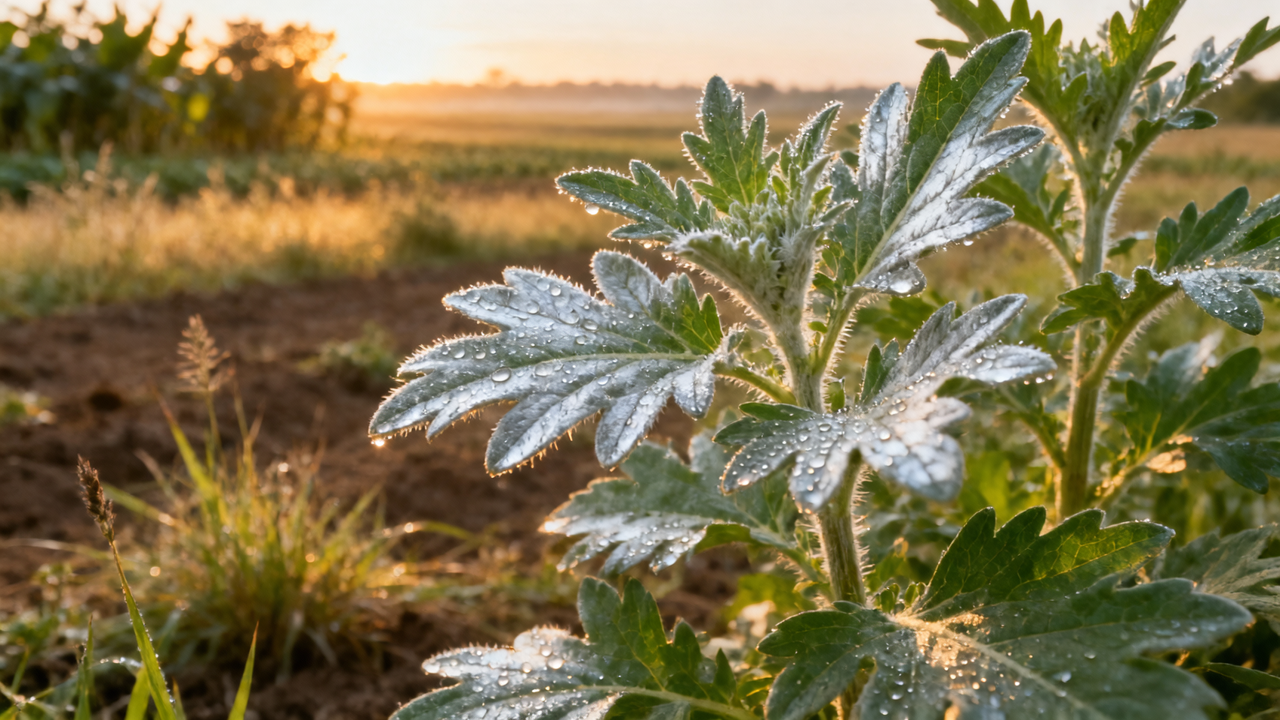
- Leaf appearance — Thick, substantial leaves with dense white underside fuzz
- Aroma — Rich, complex, warming fragrance (not flat or grassy)
- Color — Deep green topside, silvery-white underside
- Texture — When dried, leaves crumble to fine powder (not coarse fragments)
Supplier Verification
- Local presence — Genuine Qichun mugwort suppliers have operations in Qichun County
- Farm access — Can provide farm visit opportunities
- Industry recognition — Member of Qichun Mugwort Industry Association
Our Sourcing Advantage
As a vertically integrated manufacturer based in Qichun:
- 1,500+ mu own mugwort farm — Located in Qichun County, authentic origin
- Direct farm-to-factory — No middlemen, no origin ambiguity
- Cultivars selection — We cultivate premium Artemisia argyi varieties selected for therapeutic potency
- Harvest timing — Hand-harvested at peak oil content (Dragon Boat Festival period, per tradition)
- Processing expertise — 15 utility patents covering drying, storage, and processing
- University partnership — Ongoing quality research with Huazhong Agricultural University
Sourcing Recommendations for Wholesale Buyers
For TCM Clinics and Practitioners
Insist on Qichun-origin mugwort. Your clinical outcomes depend on raw material quality — the difference is perceptible to experienced practitioners and patients.
For Wellness Product Brands
Qichun mugwort provides a compelling brand story backed by 500 years of historical recognition and modern GI protection. Use origin as a quality differentiator in your marketing.
For OEM Products
Specify Qichun-origin mugwort in your OEM specifications. Require volatile oil content test reports as part of your quality documentation. The cost premium is justified by measurable quality differences.
For Bulk Raw Material Buyers
Request origin documentation and test reports for every batch. Store properly (cool, dry, dark conditions) to preserve volatile oil content. Rotate stock using first-in-first-out to maintain freshness.
The Bottom Line
Origin matters. Qichun mugwort is not a marketing claim — it is a geographically determined quality reality backed by 500 years of TCM recognition, modern scientific analysis, and legal geographic indication protection. For wholesale buyers sourcing mugwort products, specifying Qichun origin is the single most impactful quality decision you can make.